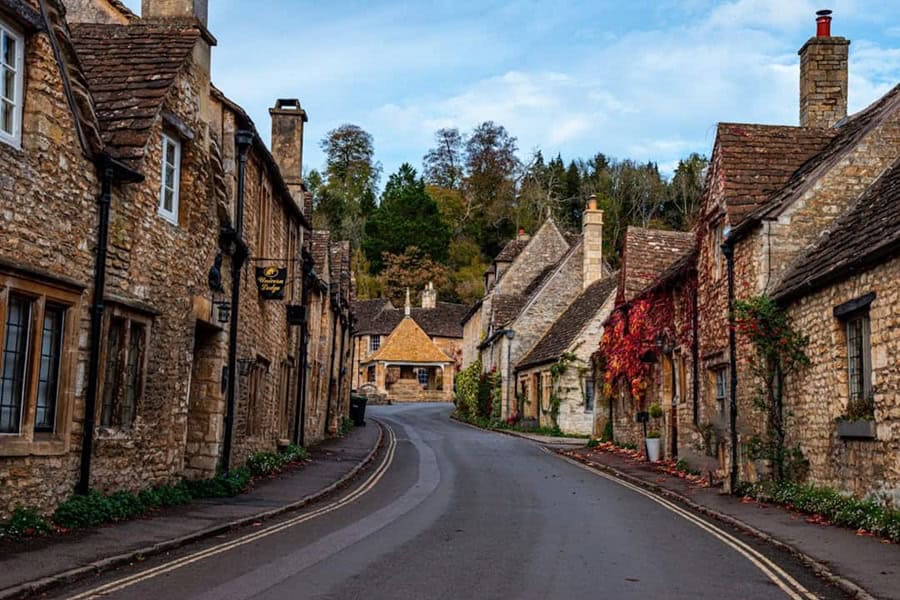
Castle Combe
25 miles from Bath
Often cited as one of England's prettiest villages, its medieval streets provide a quiet architectural contrast to the open landscape of Stonehenge.
Bath sits less than 40 miles from Stonehenge and 20 miles from the southern edge of the Cotswolds, making it one of the most efficient starting points for a combined tour. Most departures leave central Bath in the morning and return by early evening, covering both the prehistoric monument and a handful of honey-stone villages in a single circuit.
Quick answer
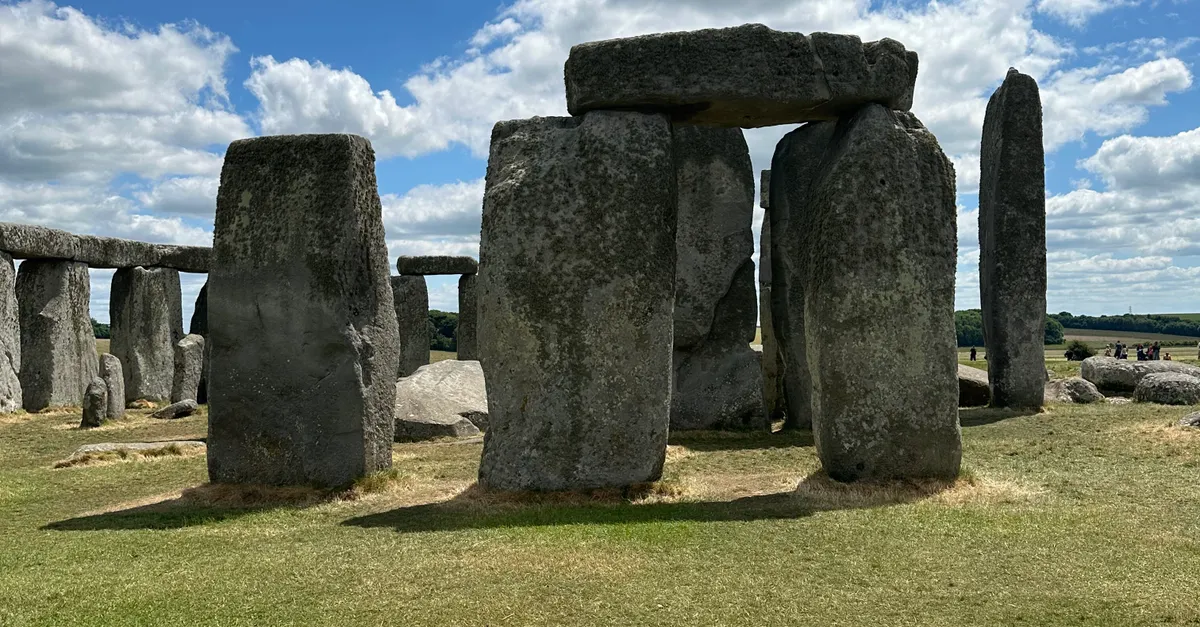
Tours departing Bath typically combine Stonehenge with two to three Cotswold villages—often Lacock, Castle Combe, or Bibury—on a seven- to nine-hour itinerary. Most operators leave between 08:30 and 09:30, allocate 90 minutes at the monument (arriving before the 11:00 crowd surge), then continue north into the Cotswolds AONB for lunch and village walks. The compact geography means less coach time and more ground coverage than London-based equivalents.
Stonehenge receives roughly 1.6 million visitors each year, and the busiest window runs from 11:00 to 15:00 when tour coaches converge from London, Bristol, and Southampton. Bath-origin tours dodge much of that surge by departing earlier and reaching the monument by 10:00 or 10:30, when the car park is half-empty and the inner circuit walkable without queuing. The route north from Stonehenge into the Cotswolds follows the A429 Fosse Way—a Roman road that cuts through open downland before climbing into the limestone belt. Most itineraries enter the AONB near Malmesbury or Castle Combe, where the landscape shifts from chalk grassland to beech woodland and dry-stone walls. Village stops vary by operator, but Lacock (a National Trust property unchanged since the 18th century) and Bibury (known for Arlington Row's weavers' cottages) anchor most circuits. Lunch breaks typically fall in Bourton-on-the-Water or Stow-on-the-Wold, market towns with cafés and medieval wool-trade architecture. Bath's advantage over other departure cities lies in geometry. London tours spend three hours on the M3 and M4 before reaching Stonehenge; Bath tours cover the same ground in 45 minutes via the A36. That time dividend allows for deeper Cotswold exploration—some itineraries add a fourth village or extend the monument visit to two hours. The return leg retraces the A429 south, re-entering Bath by 17:00 or 18:00 depending on traffic through Bradford-on-Avon. Most operators require advance booking, especially between May and September when domestic and European group demand peaks. Coaches depart from central Bath pickup points near the Abbey or Thermae Bath Spa, and a few offer hotel collection within the city boundary. Confirming the exact Cotswold stops beforehand matters—some tours prioritize photogenic villages, others focus on artisan workshops or farm shops.
“Bath-origin tours reach Stonehenge before the 11:00 crowd surge, when the inner circuit remains walkable without queuing.”
Stonehenge is situated near Amesbury, Wiltshire, SP4 7DE. Departing from Bath, the most direct approach involves traveling via the A36 and A303, while regional transit options typically require connections through Salisbury.
A36 and A303 from Bath
Direct service or via Salisbury station
GWR service to Salisbury station, then bus
The best arrival window is 09:30–11:00. Arriving during this period helps bypass peak daily crowds and heavy tour bus traffic at the site entrance.
This itinerary suits travelers staying in Bath who want to combine Stonehenge with a Cotswolds village or two in a single day. Expect a full 8–9 hour day with moderate driving between sites.
Leave Bath early to reach Stonehenge before mid-morning crowds build. The drive takes roughly 45–50 minutes via the A36 and A303.
Park at the visitor centre, collect your entrance ticket if booked in advance, and board the shuttle to the stone circle. Budget 90–120 minutes for the exhibition and walking the monument perimeter.
Head northeast toward the Cotswolds, a 60–75 minute drive depending on your first village stop. Bibury and Bourton-on-the-Water are popular choices on a logical loop.
Stop in a Cotswolds village for lunch at a local pub or café, then walk the honey-stone streets and riverside paths. Allow 90 minutes to two hours here.
If time permits, visit a second village like Stow-on-the-Wold or Castle Combe before the return journey. Keep this stop brief—30 to 45 minutes.
Begin the drive back, approximately 75–90 minutes depending on your last Cotswolds stop and traffic through Wiltshire.
When planning your Stonehenge and Cotswolds tour from Bath, it is helpful to account for the standard admission costs required to access the site. These fees are determined by the site's official gate pricing.
Verdict: A typical adult pays 32 GBP for entry, though membership status will waive this fee.
Stonehenge maintains consistent operating hours throughout the week, providing reliable access for visitors departing from Bath.
Combining a visit to Stonehenge with the Cotswolds allows visitors to contrast Neolithic history with the characteristic architecture of English limestone villages. These sites are situated along the transit corridor between Bath and the Wiltshire plains, making them logical additions to your day.
25 miles from Bath
Often cited as one of England's prettiest villages, its medieval streets provide a quiet architectural contrast to the open landscape of Stonehenge.
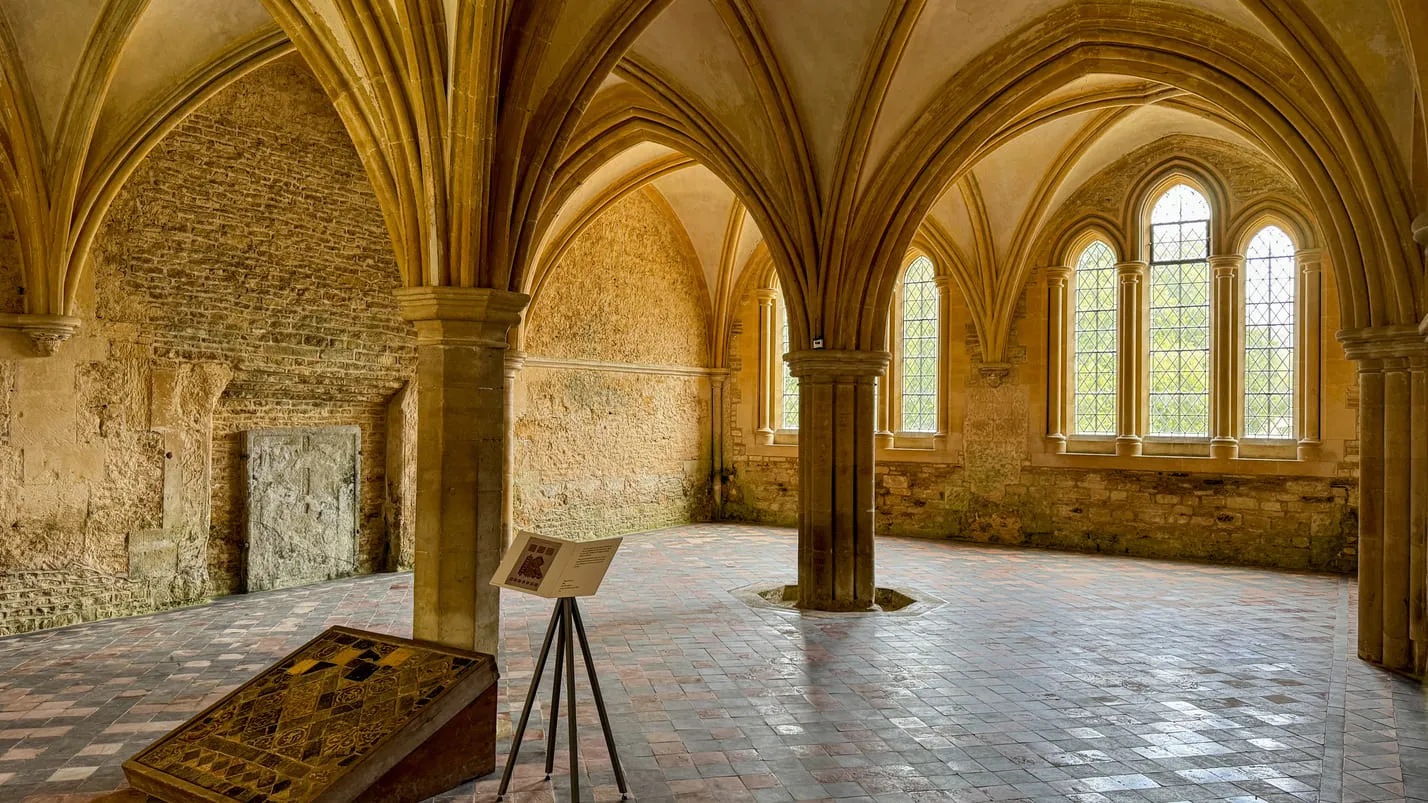
20 miles from Bath
This site features a 13th-century abbey and a preserved village that complements the historical focus of a Stonehenge visit.
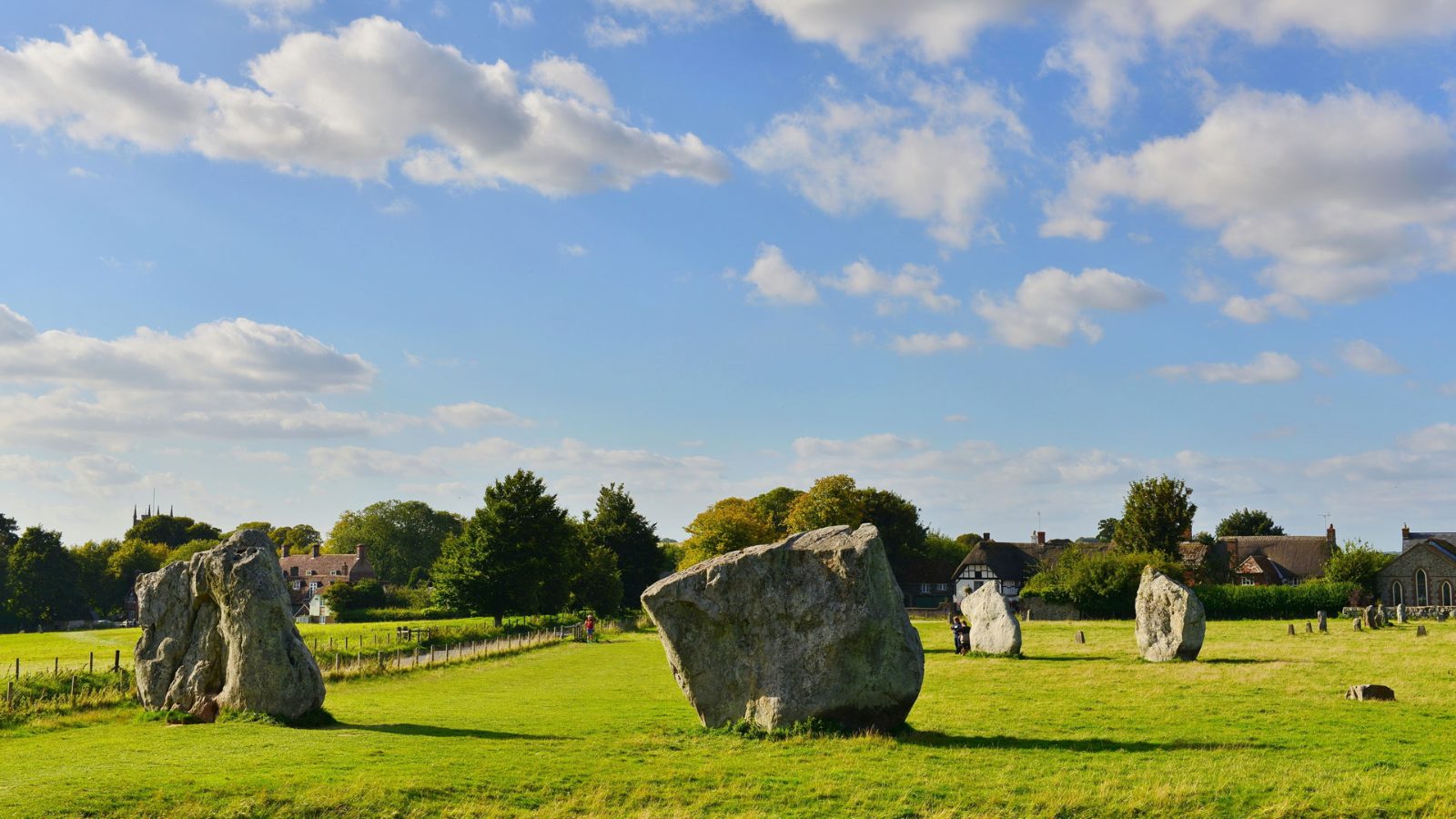
28 miles from Bath
As the largest megalithic stone circle in Europe, this site offers a more accessible prehistoric experience compared to the managed environment at Stonehenge.
Everything you need to know about stonehenge and cotswolds tour from bath
Yes, many visitors choose a stonehenge and cotswolds tour from bath to combine these iconic English destinations into a single day. These itineraries often depart from central locations, allowing for efficient travel between the historic city of Bath and the Wiltshire landscape.
You can search for a reputable stonehenge and cotswolds tour from bath through official tourism operators or travel agencies online. Checking provider credentials and recent reviews will help ensure a reliable experience for your journey.
A comprehensive stonehenge and cotswolds tour from bath usually spans a full day, typically lasting between eight to ten hours. This duration accounts for travel time through the countryside and sufficient time to explore the stone circle and nearby village landmarks.
Most structured outings include a stop at the monument, allowing you to walk the perimeter and view the ancient sarsen stones. These excursions are designed to balance time at the World Heritage site with scenic drives through the honey-colored villages of the Cotswolds.
The standard gate price for an adult entry to Stonehenge is 32 GBP. Ensure you check if your chosen tour package includes this cost or if you need to purchase admission separately.
To avoid peak daily crowds and heavy tour bus traffic, the best arrival window at Stonehenge is between 09:30 and 11:00. Arriving during this period provides a more peaceful experience at the neolithic site before larger groups arrive.
While some tours offer priority entry, it is important to confirm the specific inclusions of your stonehenge and cotswolds tour from bath. Most operators manage ticketing in advance to facilitate a smoother entry process for their guests.
Stonehenge, Bath & Cotswolds Tour Options
Read more GuideIs Stonehenge in the Cotswolds?
Read more GuideIs Stonehenge Worth the Trip from London?
Read more GuideHow Long Does It Take to Tour Stonehenge?
Read more Tickets & toursStonehenge and Cotswolds Day Tour Packages
Read more Tickets & toursStonehenge & Cotswolds Tours from London
Read more GuideStonehenge & Cotswolds Tours from Oxford
Read more